
Institutional judgment.Startup speed.AI-native execution.

Aulius is the embedded AI strategy and execution partner for Asia's growth and cross-border companies.

Strategy, build, deployment and continuous improvement — carried by one team, from the first question to the system that runs every day.

AI interpretsambiguity
Software verifiescertainty
People decidejudgment

Every system we build separates the three

Sectors

  • Professional services
  • Industrial manufacturing
  • Cross-border trade
  • Financial services

The gap is not what AI can do. It is what enterprises actually capture.

What enterprises captureWhat AI can already do
Schematic. The proportion is drawn, not measured.

AI has advanced far enough to create real value for almost every business — lower operating cost, faster and better decisions, capacity no longer bound by headcount, new products and new revenue.

Most companies are still at the beginning. The board feels the pressure. Underneath, the data is fragmented, the workflows are legacy, and there is no one inside the building who can bridge the two.

  1. What can AI reliably do today — and what can it still not do?
  2. Which processes are worth doing first?
  3. What separates a demo from a system that runs a business?
  4. How do you trade off accuracy, cost, latency, privacy and deployment?
  5. How do you get people to actually use it?

AI capability is no longer the only bottleneck. Enterprise judgment and execution are.

The hardest part of enterprise AI happens before the first line of code is written.

We start with the business. Then we decide whether — and how — to use AI.

We are neither an advisory firm nor a staffing shop. We take the business problem from opportunity identification through to production and ongoing operation. The work is done alongside the people who own the process and the people who run the systems — with internal IT, not around it.

  1. 01DiscoverEnter the real workflow. Find where the value and the obstacles actually are.
  2. 02PrioritiseRank by business value, feasibility, risk and readiness — and say no to what will not pay.
  3. 03BuildBuild and validate fast. Right tool at every step, not the most powerful one everywhere.
  4. 04DeployInto real systems, real permissions, real exceptions. To production, not to a demo.
  5. 05AdoptInto the way people already work. Minimum migration, minimum retraining.
  6. 06MeasureFrom technical acceptance to realised value.
  7. 07EvolveIterate on real usage. Re-optimise as capability and cost move.

Others start with what AI can do. Aulius starts with what the business needs to achieve.

We do not ignore hallucinations. We architect around them.

Enterprise AI cannot be built on the assumption that the model is always right. Every system we build separates three kinds of work, and holds the boundary between them.

  1. AI
  2. Software
  3. People
One line is one piece of work; where it stops is where it was resolved. Schematic — the proportions are drawn, not measured.
  1. AI interprets

    Unstructured documents, ambiguous language, context, classification and mapping — the work fixed rules cannot cover.

  2. Software verifies

    Arithmetic, reconciliation, formats, fixed business rules, data relationships — the work that must be exactly right.

  3. People decide

    Low-confidence results, mismatches, exceptions, approvals, negotiation — and final accountability.

AI for ambiguity. Code for certainty. Humans for judgment.

Probabilistic intelligence inside deterministic boundaries.

The goal is not to remove people from the loop. It is to make every minute of human attention count.

Selected work

Professional services

A knowledge-work business whose growth was capped by the volume of documents its people had to handle by hand. We rebuilt the core operation around AI-native processing — with the output landing in the formats their staff already knew, so nothing had to be relearned.
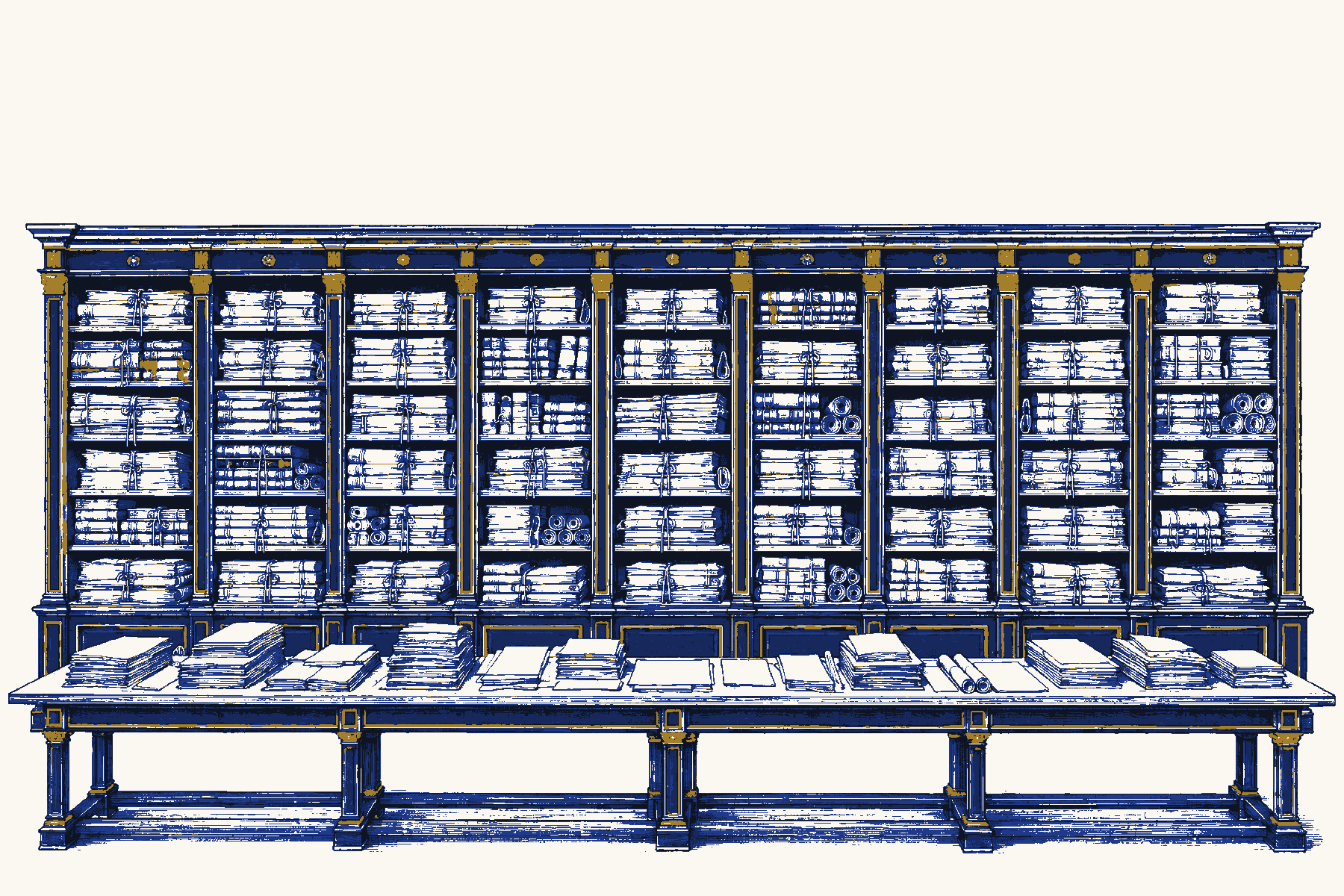
Six weeksfrom the first meeting to the first workflow running in the business

We then built the operating platform for the business line that ceiling had been blocking.
Industrial manufacturing

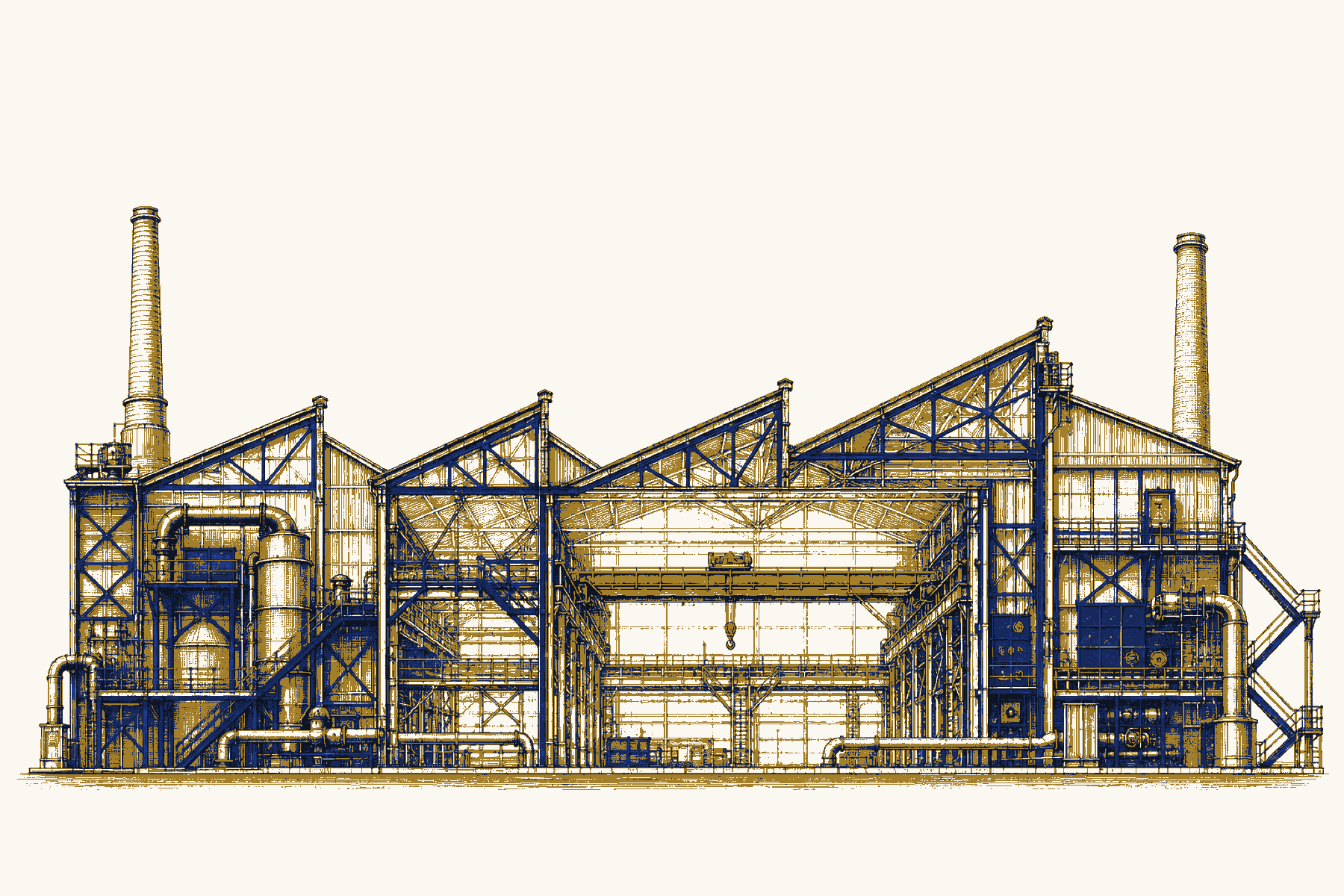
We did not start by building AI. We started by establishing what the company's data could honestly support, and unified it into a single definition of the business. If the layer underneath is not true, nothing built on top of it is either.

One definitionof the business, where the systems underneath it held four

One shared set of numbers, and analysis, planning and costing standing on top of it.

Cross-border trade

An operation running out of shared mailboxes, where every change of instruction had to be caught, reconciled and recorded by a person. We designed the workflow that reads what arrives, keeps every version accounted for, and prepares the paperwork.

4,000 a dayinstructions and documents moving through the workflow

Every commitment made to a counterparty stays with a human being.

Financial services

A domain the founding team knows from the inside. The system follows an institutional process end to end, and reconciles each new document against everything already known rather than reading it in isolation.

Eleven yearsof prior filings each new document is read against

Institutional memory that compounds inside the institution, instead of leaving with the person who built it.

Asia's growth and cross-border companies.

We do not serve everyone. We work with companies that have a real business underneath, understand what good execution is worth, and are prepared to pay for judgment as well as delivery.

  • Operating across borders, languages or regions
  • Data already exists — scattered across ERP, CRM, mailboxes and spreadsheets
  • The business runs on documents, coordination and high-value knowledge work
  • Off-the-shelf software never quite fits the real workflow
  • No mature in-house AI team
  • Real requirements on reliability, privacy, integration and continuous operation

Our capabilities are horizontal. Our go-to-market is focused.

Modular implementation, followed by continuous operation and improvement.

Each engagement is scoped by module. You get value from the first one, and we keep finding the next from inside your operation.

Implementation

Design, development, integration, deployment and acceptance of a defined module.

Operation

After acceptance: running, maintaining and improving it as usage, models and cost move.

On live engagements, small issues and workflow adjustments are typically resolved the same day or the next. The feedback loop is part of the product, not post-project maintenance.

The desk

For your judgement

22items are yours to decide

  1. Low-confidence readings12
  2. Mismatches against the record04
  3. Exceptions outside the rules03
  4. Approvals over threshold02
  5. Replies waiting to be sent01

Everything else was already handled.

Illustrative. Not a client system.

The same people decide the architecture and deliver the system.

A decade or more each, across banking, investment and technology — and one set of people on an engagement, from the first question to the system that runs every day.

  1. Janelle Sha

    Co-founder & Chief Executive Officer

    • Flow
    • NORBr
    • Feedzai
  2. Shaun Xue

    Co-founder & Chief Product and AI Officer

    • J.P. Morgan
  3. Ernest Yuen

    Co-founder & Chief Revenue Officer

    • Standard Chartered
    • J.P. Morgan
  4. Richard Cai

    Co-founder & Head of Partnerships, AGI

    • Bank of China
    • CFA

The full teamRoles, institutions and what each of them owns.

Tell us what is slowest, most manual, or most error-prone in your business.

We will tell you honestly whether AI can fix it today — and if it can, where to start. No pitch deck required.

Clients bring us operational pain — not technical specifications.

What you write here goes to the founding team and nowhere else. We do not add you to a list.